
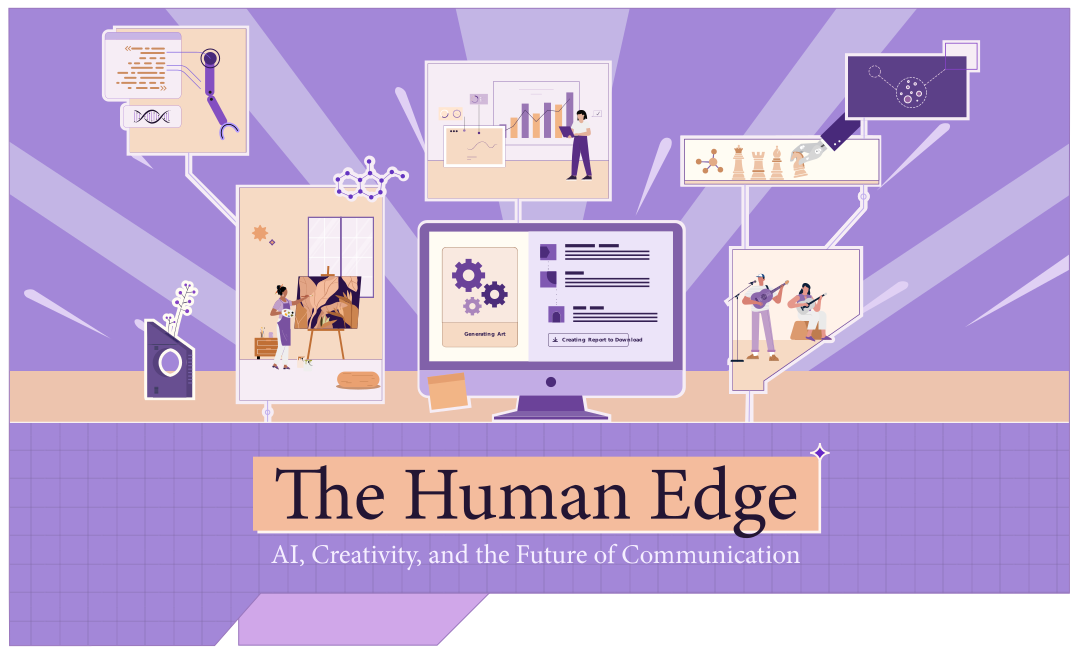
This project explores the evolving relationship between artificial intelligence and human creativity in modern communication. Through research, analysis, and industry perspectives, it examines where AI accelerates progress and where human judgment remains essential. The report aims to spark informed dialogue about technology’s role in shaping ideas, decision-making, and the future of creative work.
The Human Edge is a research-led exploration of how artificial intelligence is reshaping communication and outreach across creative, corporate, and developmental organisations. Drawing on practitioner insights, survey data, and existing research, the report examines where AI is accelerating workflows and expanding scale, and where its limits around judgement, creativity, empathy, and cultural context remain evident. Rather than positioning AI as either a threat or a solution, the study focuses on how professionals are adapting in practice, navigating new expectations, and redefining the role of human expertise in an AI-saturated communication landscape.
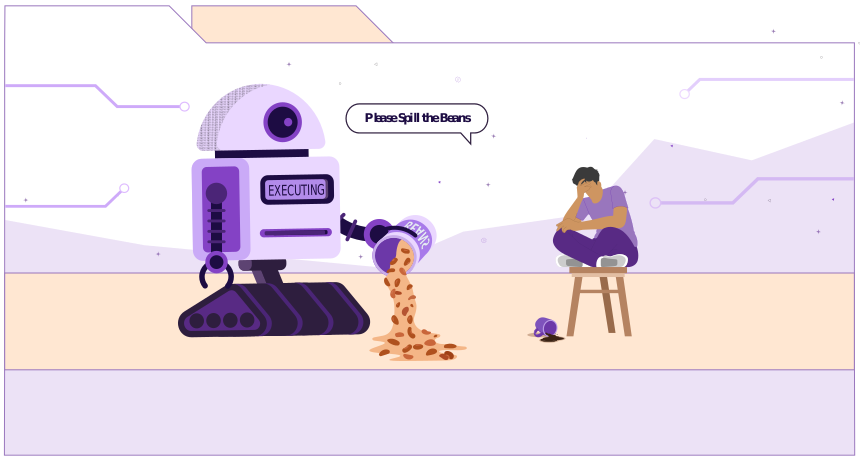
The Limits of the Machine Mind examines where AI still falls short in creative communication. While fluent and efficient, AI struggles with layered meaning, cultural nuance, empathy, and contextual judgment. Its outputs are highly dependent on precise prompts and often drift toward stylistic sameness. These limitations reinforce the continued importance of human interpretation, originality, and critical thinking in shaping meaningful communication.

AI Shaping the Next Phase of Outreach explores how artificial intelligence is changing the scale, speed, and structure of communication work. It examines faster execution, wider reach, and personalisation, while showing how automation is unevenly adopted across sectors, reshaping workflows, effort distribution, and expectations around efficiency.

What Clients Anticipate examines how expectations of communication and creative partners are evolving as AI becomes commonplace. It explores rising demands for speed and efficiency alongside renewed emphasis on originality, accountability, and ownership, highlighting shifts toward in-house capabilities and deeper, judgement-led collaboration beyond execution-only services.
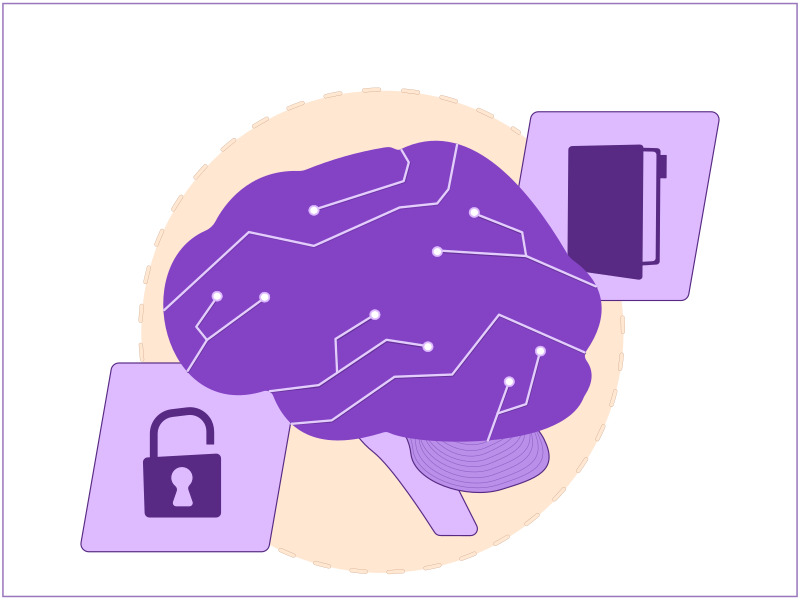
Concerns over data storage, reuse, and consent.
.svg)
AI outputs can echo training data; copyright protection applies only to human-authored work.
.svg)
Over-use leads to cognitive and stylistic convergence across creators.
.svg)
Audiences remain skeptical of AI-generated content; disclosure alone doesn’t rebuild credibility.

Creative Organisation’s Relevance explores what the rise of AI means for the future role of creative and communication agencies. It examines how value now lies in judgement, originality, and cultural understanding, showing that relevance depends not on access to AI, but on the ability to integrate it thoughtfully and stand behind decisions.
As AI moves from efficiency tool to creative collaborator, organisations face new expectations around speed, authorship, and accountability. This research explores the uneven adoption, emerging tensions, and the future of hybrid human-AI systems.


